
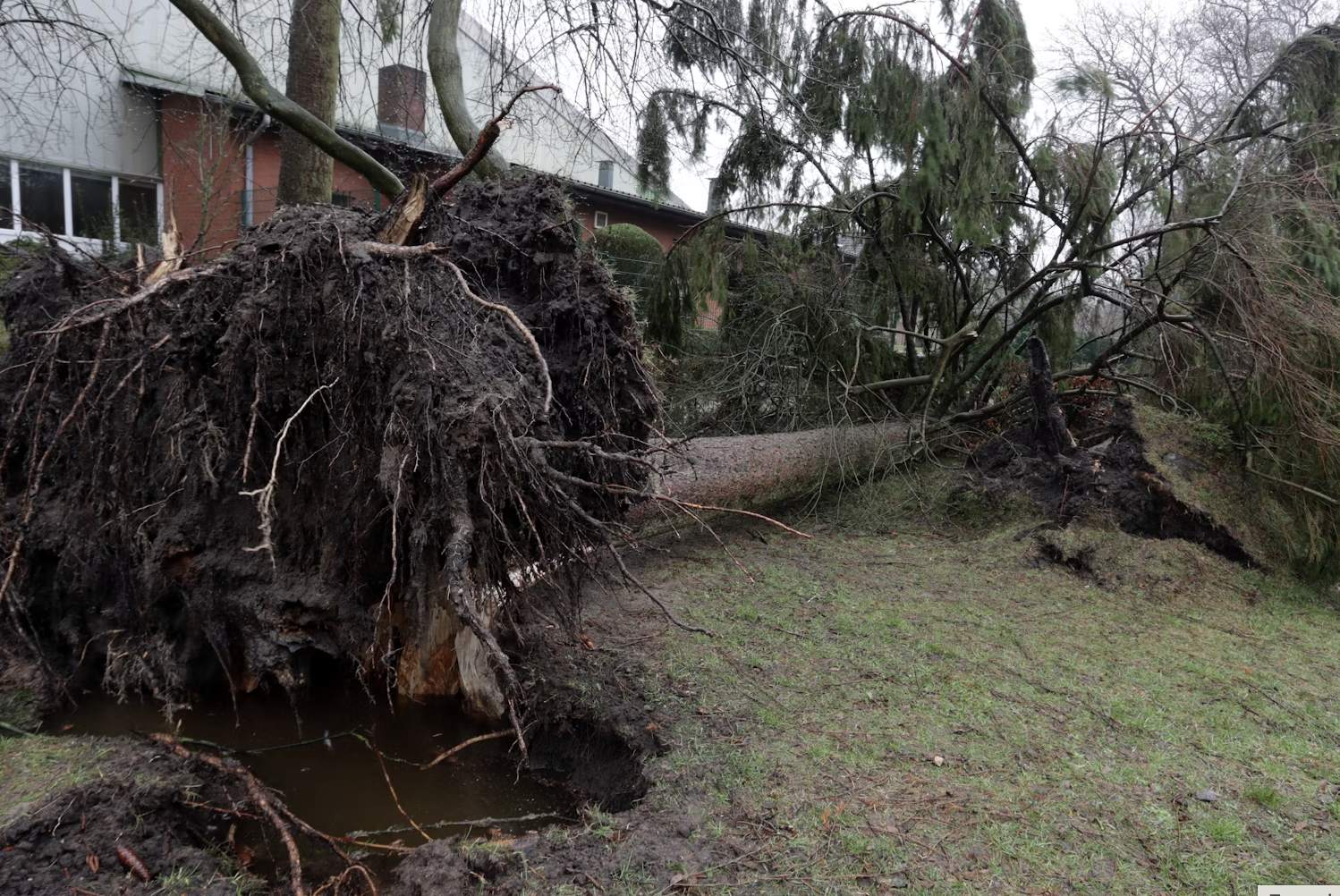
Trees that come down in wind events are almost never trees that were structurally sound before the wind arrived. The failure is the conclusion of a process that was progressing long before the weather became the proximate cause. The wind did not destroy the tree. The wind revealed what the decay had already done.
The warning signs differ by tree species and by the conditions in which each tree has grown. Cottonwoods along the South Boulder Creek corridor can develop different structural vulnerabilities than the established oaks and maples found in Lafayette’s residential areas.
Changes in trunk condition, major limbs, canopy growth, root stability, and visible decay can reveal problems before a failure occurs. Tree trimming and removal service Lafayette CO becomes part of that process when damaged or declining growth needs to be evaluated, reduced, or removed before it creates a larger hazard.
Reading those patterns before the failure event is what separates preventive management from reactive cleanup.
Crown Dieback: The Map of What Is Happening Underground
Crown dieback is the progressive death of branch terminals that begins at the canopy periphery and moves inward toward the trunk. The pattern reveals the mechanism.
Top-down dieback, apex failing first: The vascular system’s capacity to move water and nutrients to the most elevated and distant canopy sections is decreasing. The tree eliminates what it cannot supply, starting with the portions requiring the most energy to maintain. This pattern is associated with root zone stress from soil compaction, drought, or root system damage, rather than with disease localized to one structural area.
One-sided dieback with opposite crown healthy: Root damage is localized on the failing side. Soil compaction from a construction project on the east side of a tree produces dieback on the east-facing crown sections while the west-facing crown remains healthy. The cause is at ground level on the side corresponding to the dieback, even when the surface shows no visible disruption.
Interior dieback with outer crown intact: Central branch death while the outer perimeter maintains leaf production indicates a different condition: vertical resource allocation where the tree prioritizes the most productive photosynthetic zones (outer canopy with maximum light access) over interior branches producing less. This is less immediately alarming than apex or one-sided dieback but warrants monitoring.
The International Society of Arboriculture’s Certified Arborist training documentation identifies crown dieback as the most reliable early indicator of tree decline because it reflects systemic problems before structural surface signs appear.
Fungal Fruiting Bodies: What They Are Actually Communicating
A mushroom or bracket fungus at the base of a tree or on the lower trunk is not incidental to the tree’s condition. The fruiting body is the reproductive structure of a fungal colony that has been consuming wood fiber inside the tree for months or years before the surface expression appeared.
Three decay categories produce distinct structural consequences.
Brown rot fungi (including Phaeolus schweinitzii and Laetiporus sulphureus): Consume the cellulose component of wood, leaving a brown, brittle lignin lattice with a characteristic cubical fracture pattern. Brown-rotted wood has lost the cellulose fiber that provides tensile strength. A tree with significant brown rot volume in the trunk or root system is approaching structural failure independent of what the crown condition suggests.
White rot fungi (including Ganoderma applanatum): Consume both cellulose and lignin, producing bleached, spongy wood that loses structural integrity progressively across a longer timeline than brown rot.
Armillaria mellea (honey mushroom, root rot): Attacks the root system and lower trunk. The tree crown above a significant Armillaria infection looks healthy for years while the root system’s capacity to anchor the tree diminishes. The honey mushroom clusters that appear at the soil line in fall are the first visible sign of a process that has been active underground for a considerable period.
What Soil Events Near a Tree Produce in the Following Growing Season
Construction activity within the drip line compacts the soil, severs feeder roots, and reduces the oxygen-carrying porosity that the root system requires for function. A tree that experienced significant soil compaction during a project completed in October shows no crown response until the following July or August when water demand during the growing season exceeds the damaged root system’s delivery capacity.
Grade changes that raise soil level around the base cover the root flare, the zone where the trunk transitions to the root system, and create conditions for stem girdling roots. Roots covered rather than spreading outward loop around the trunk and progressively restrict vascular flow. The visible crown consequence appears years after the grade change.
Boulder County’s clay-loam soils with bentonite content in lower elevation areas create a specific additional risk. Expansive clay that wets and swells during spring snowmelt and then contracts severely during summer dry periods produces movement in the root zone that stresses fine root connections.
How the Target Zone Calculation Works
The decision to remove a tree requires weighing the probability of failure against the consequence if failure occurs. The consequence side of this calculation is specific to the tree’s target zone: what falls within the tree’s reach in the most likely failure direction.
A large cottonwood that fails away from any structure, utility line, or pedestrian area has a consequence profile different from the same structural condition in a tree positioned to fall across a residence. The same degree of decay in a tree with no meaningful targets warrants monitoring. The same decay in a tree with a high-value target warrants different action.
The ISA’s Tree Risk Assessment Qualification (TRAQ) credential defines professional competency in this evaluation framework. A TRAQ-certified arborist applies a structured risk assessment that considers likelihood of failure, likelihood of impact given the target location, and consequence of impact to produce a rating that is consistent across assessors and defensible in writing.
Key Takeaways
- ISA Certified Arborist training identifies crown dieback as the most reliable early indicator of systemic tree decline
- Ganoderma applanatum (artist’s conk) indicates white rot consuming both cellulose and lignin inside the wood structure
- Armillaria mellea (honey mushroom) attacks roots and produces a healthy-looking crown while the anchoring system is progressively compromised
- Construction soil compaction damage within the drip line produces crown stress in the following growing season rather than immediately
- The TRAQ-certified arborist evaluation framework assesses failure likelihood, impact likelihood, and consequence together rather than any single factor in isolation
The year before a tree falls, it communicates. The signals are in the crown pattern, at the trunk base, and in the soil changes around it. Reading those signals is the work that separates a tree that was removed on schedule from one that was removed after it landed somewhere.