

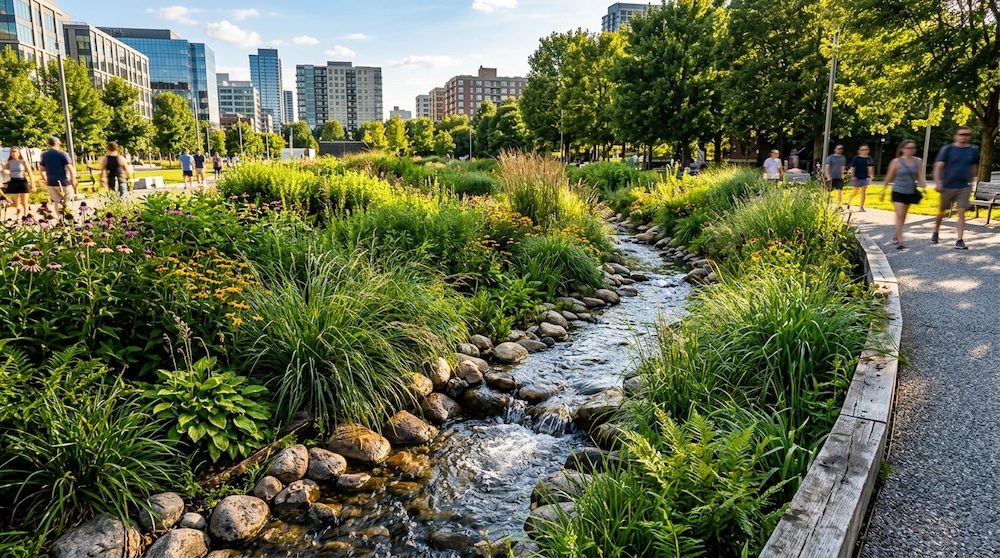
When it rains, the water doesn’t just disappear. It moves — across parking lots, down streets, through drainage systems — collecting everything in its path before reaching the nearest river, creek, or bay. What rides along with that water determines whether local watersheds thrive or degrade.
Modern stormwater management is the infrastructure standing between urban runoff and clean water. Here’s how it works.
The Problem With Pavement
Natural landscapes absorb rainfall. Roots drink it, soil filters it, wetlands slow it. Developed land does the opposite — impervious surfaces like asphalt and concrete shed water rapidly, concentrating volume and velocity in ways natural systems were never designed to handle.
That fast-moving runoff carries a toxic cargo:
- Motor oil and heavy metals from roads and parking lots
- Fertilizers and pesticides from lawns and landscaping
- Sediment, litter, and pet waste
- Bacteria from overwhelmed sewer overflows
Once this cocktail enters a waterway, it degrades water quality, disrupts aquatic ecosystems, and in many cases travels downstream to drinking water intakes and coastal zones.
How Modern Stormwater Management Works
Green Infrastructure at the Street Level
The most effective modern approach mimics what natural landscapes do — slow water down and let the ground filter it. Green infrastructure tools deployed at the street level include:
Bioswales — vegetated channels that slow runoff and allow pollutants to settle and absorb into the soil before water reaches storm drains.
Permeable pavement — surfaces designed to allow rainfall to pass through rather than run off, recharging groundwater while reducing runoff volume.
Parkway and median plantings — strategically placed vegetation that intercepts runoff from roads before it enters the drainage system.
Retention and Detention Basins
Larger-scale stormwater facilities capture high-volume runoff during storm events. Retention basins hold water permanently, allowing pollutants to settle and aquatic plants to filter nutrients. Detention basins temporarily hold storm surges and release them slowly — reducing the peak flow that would otherwise overwhelm downstream waterways.
Both systems protect rivers from the erosive force of sudden high-volume discharge.
Urban Tree Canopy as Infrastructure
Trees are underrated stormwater infrastructure. A mature tree intercepts thousands of gallons of rainfall annually — absorbing water through roots, storing it in trunk and branches, and releasing it slowly through transpiration.
Cities expanding urban tree canopy are investing in stormwater management as much as aesthetics.
Watershed-Level Protections
Riparian Buffer Zones
Strips of native vegetation along riverbanks act as the last line of defense — filtering runoff, stabilizing banks against erosion, and providing habitat that supports the biological health of the waterway.
Many Northern California municipalities now require riparian buffers as a condition of development permits near waterways.
Municipal Separate Storm Sewer Systems
Most cities operate MS4 systems — storm drains that discharge directly to waterways without treatment. Under federal Clean Water Act permits, municipalities must actively manage what enters these systems through public education, street sweeping, construction site controls, and illicit discharge detection.
The regulatory framework gives teeth to local stormwater programs that might otherwise lack enforcement tools.
What Residents Can Do
Modern stormwater management doesn’t end at the municipal level. Household practices make a direct difference:
- Sweep driveways instead of hosing them down
- Dispose of motor oil, paint, and chemicals at designated collection sites
- Plant native vegetation that absorbs rather than sheds rainfall
- Pick up pet waste before it washes into storm drains
The Connection Between Streets and Rivers
What enters the storm drain on your street has a destination. In most communities, that destination is the nearest waterway — often within hours.
Modern stormwater management exists to interrupt that journey. The infrastructure is increasingly sophisticated, but the principle is simple: keep the street out of the river.