

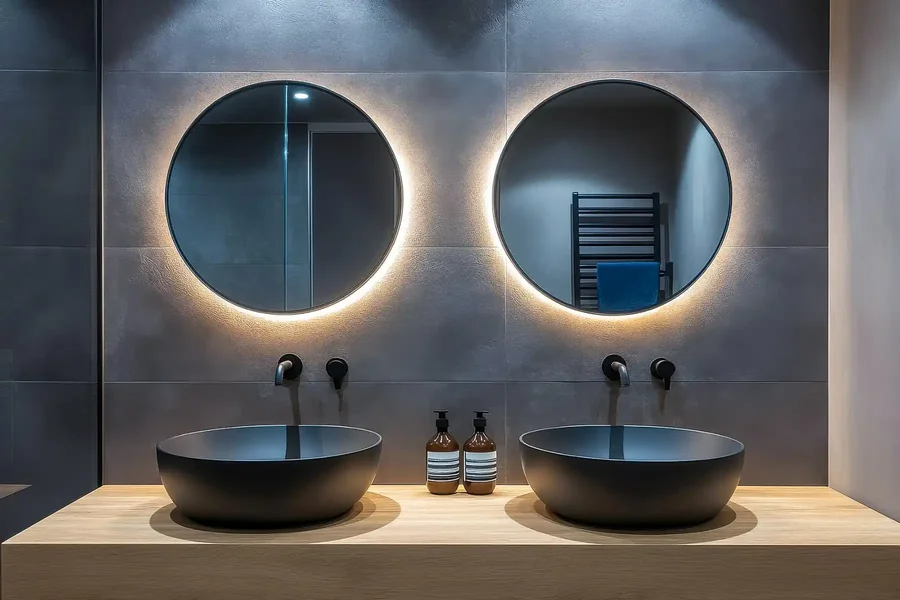
Bathroom mirrors have moved well beyond being purely functional fixtures. Today, homeowners are paying closer attention to shape, lighting, proportions, energy use, and practical features when choosing a mirror for a renovation or bathroom refresh. Among the options available, circular mirrors with integrated LED lighting have become particularly popular because they combine a softer silhouette with built-in illumination. A round shaped decorative led mirror for bathroom can work especially well when a bathroom contains strong horizontal or vertical lines from cabinetry, tile, countertops, and plumbing fixtures. The curved profile introduces visual contrast without requiring an elaborate frame.
But appearance should not be the only consideration. The quality of the mirror glass, type and placement of LEDs, color temperature, brightness control, electrical requirements, moisture protection, installation method, and available wall space all affect whether a particular mirror is actually suitable for the room.
Why Round Bathroom Mirrors Are So Popular
Round mirrors have a visual quality that rectangular mirrors do not. Their lack of corners can soften bathrooms dominated by straight architectural lines, creating a more relaxed appearance. This is one reason circular and organic shapes continue to appear in contemporary bathroom design. Recent design coverage has highlighted softer mirror forms as part of a broader move toward spa-inspired and less rigid bathroom interiors.
The shape can also help define a vanity area. Instead of simply filling the wall above a countertop, a round mirror can function as a distinct focal point. This can be particularly effective in powder rooms, compact bathrooms, and minimalist spaces where decorative elements are intentionally limited.
That said, a round mirror is not automatically better than a rectangular one. The best shape depends on the vanity width, wall dimensions, ceiling height, lighting arrangement, and overall bathroom design.
How Integrated LED Lighting Changes the Mirror
The biggest functional difference between a conventional mirror and an LED bathroom mirror is the built-in illumination. Integrated LEDs can provide either direct illumination around the front perimeter or indirect light projected behind the mirror. These two approaches create noticeably different effects.
Front-Lit LED Mirrors
Front-lit mirrors direct light toward the user. This configuration can be useful for grooming activities because the light is positioned closer to the face.
Depending on the design, perimeter lighting can provide relatively even illumination with fewer harsh shadows than a single overhead fixture. However, the quality of the lighting depends heavily on LED placement, diffuser design, brightness, and color rendering.
Backlit Bathroom Mirrors
Backlit mirrors place LED lighting behind the glass, creating a halo-like glow around the mirror. This produces softer ambient illumination and emphasizes the circular silhouette.
Backlighting is generally more decorative than task-oriented. It can contribute to the overall bathroom atmosphere, but it should not necessarily be treated as a replacement for dedicated vanity or ceiling lighting.
For this reason, layered bathroom lighting is usually the more practical approach. The mirror can provide useful localized illumination while ceiling lights, sconces, or other fixtures handle broader room lighting.
Important LED Features to Compare
Not all illuminated bathroom mirrors provide the same lighting performance. Looking only at appearance can lead to a poor choice.
Color Temperature
Color temperature is measured in Kelvin (K). Warm lighting typically appears more yellow, while cooler lighting appears whiter or slightly bluish. Many modern LED bathroom mirrors offer adjustable color temperatures. Current products commonly advertise ranges around 3000K to 6000K, allowing users to switch between warmer and cooler illumination.
A warmer setting can create a relaxed atmosphere, while a neutral setting may be preferable for everyday grooming. Cooler settings can provide a brighter, more clinical appearance but may not be desirable for every bathroom. Adjustability is useful, but it is not essential. A well-selected fixed color temperature can perform perfectly well.
Dimmability
A dimmable mirror gives users greater control over brightness. This matters because the ideal illumination for shaving, applying makeup, or skincare may be different from the softer lighting preferred late at night. Some current LED mirrors offer broad dimming ranges, sometimes from roughly 10% to 100%. However, maximum brightness alone does not determine lighting quality. Excessively bright LEDs can create glare, while poorly diffused strips can produce visible hotspots.
Color Rendering
Color rendering is particularly relevant for makeup application, skincare, and other tasks where accurate perception of skin tones matters. Look for a published Color Rendering Index (CRI) when available. A higher CRI generally indicates that the light source renders colors more faithfully than a lower-CRI source. Some bathroom mirrors currently advertise CRI ratings of 90 or higher.
Choosing the Right Mirror Size
Size is one of the easiest ways to get a bathroom mirror wrong. A mirror that is too small can make a large vanity feel unbalanced. A mirror that is too large can overwhelm a narrow wall or interfere visually with nearby cabinets, sconces, or architectural features.
For a single vanity, the mirror diameter is often selected in relation to the vanity width rather than simply choosing the largest available size. One current bathroom-design recommendation places a round mirror at approximately 60% to 70% of the vanity width, although this should be treated as a design starting point rather than a rigid rule.
For example, a 48-inch vanity might pair naturally with a mirror around 28 to 34 inches in diameter, depending on the surrounding wall space and desired visual proportions.
Before selecting a diameter, measure the vanity, available wall area, faucet location, backsplash height, and any nearby lighting fixtures.
Anti-Fog Technology: Useful or Overrated?
Anti-fog functionality can be genuinely useful in bathrooms where condensation regularly covers the mirror after a hot shower. Many illuminated bathroom mirrors now incorporate a heated defogging pad behind part of the mirror. When activated, the heating element warms the glass enough to reduce condensation in the treated area. Some models use automatic shutoff timers for the defogging function.
The important distinction is that anti-fog technology does not necessarily mean the entire mirror surface will remain perfectly clear under every condition. Coverage varies by model, and the defogging area may be smaller than the mirror itself.
If your bathroom experiences heavy condensation, check the manufacturer’s specifications for the actual defogger coverage and operating controls rather than assuming the feature works across the entire surface.
Glass Quality and Safety Considerations
The mirror glass itself deserves as much attention as the electronics. Some illuminated bathroom mirrors use tempered glass, which is processed to increase strength and alter the way it breaks if damaged. Current U.S. products in this category commonly specify tempered or shatter-resistant glass.
Moisture resistance is another consideration because bathrooms expose electrical components and backing materials to humidity. Look for clearly stated safety or certification information appropriate for the U.S. market.
Listings may reference certifications such as UL or ETL and ingress-protection ratings for relevant components. These details are more meaningful than vague claims that a mirror is simply “waterproof.” For example, some current models specify ETL certification and IP-rated components.
Consumers should also distinguish between the mirror itself and its electrical components. An IP rating may apply to particular components rather than making the entire assembly suitable for direct water exposure.
Hardwired or Plug-In Installation?
Installation requirements should be determined before purchasing the mirror. Some LED bathroom mirrors support plug-in installation, while others are designed for hardwiring. Certain models provide both options. A plug-in connection can simplify installation where an appropriate outlet is already positioned correctly. Hardwiring can produce a cleaner appearance because the power cord is concealed within the wall, but it involves electrical work and may require a qualified electrician depending on the installation.
Never assume that an integrated LED mirror can be installed anywhere simply because it is marketed for bathroom use. Follow the manufacturer’s installation instructions and applicable electrical requirements for the location.
How to Coordinate a Round LED Mirror With the Vanity
A circular mirror becomes much more effective when the surrounding elements support its shape. A floating vanity with a clean rectangular profile can create an appealing contrast against a round mirror. Similarly, curved faucets, rounded hardware, or arched architectural details can reinforce the softer geometry.
Frame finish also influences the result. Matte black can create a crisp contemporary contrast, while brushed brass or warmer metallic finishes can introduce visual warmth. Frameless designs tend to produce a quieter, minimalist appearance.
The key is not to match every element exactly. Repeating one finish or shape is usually enough to establish visual cohesion without making the bathroom look overly coordinated.
Common Mistakes to Avoid
One common mistake is treating the mirror as the bathroom’s only light source. Even a bright integrated LED system may not illuminate the entire room effectively.
Another is choosing a diameter based solely on personal preference. Proportion matters more than simply selecting a large mirror.
Buyers also sometimes focus heavily on smart features such as Bluetooth speakers, touch controls, or memory settings while overlooking fundamentals such as glass quality, lighting performance, certification, installation requirements, and warranty terms. Current U.S. listings show that these additional features are increasingly available, but they should be considered secondary to the mirror’s core function.
Finally, avoid assuming that “LED” automatically means high-quality lighting. Examine brightness controls, color temperature, CRI when provided, diffuser design, and available technical specifications.
Is a Round LED Mirror Right for Your Bathroom?
A round shaped decorative led mirror for bathroom makes the most sense when you want to combine a softer decorative profile with integrated task or ambient lighting. It can complement contemporary, minimalist, transitional, and spa-inspired bathroom designs without requiring a heavily decorative frame.
The right choice ultimately depends on proportion and performance. Measure the vanity and wall first, determine whether you need front lighting or primarily a backlit effect, compare color temperature and dimming options, and verify glass and electrical specifications before installation.
Aesthetics may be what initially attracts you to a round LED mirror, but thoughtful selection comes down to something more practical: the mirror should fit the space, provide useful light, withstand the bathroom environment, and work safely for everyday use.