

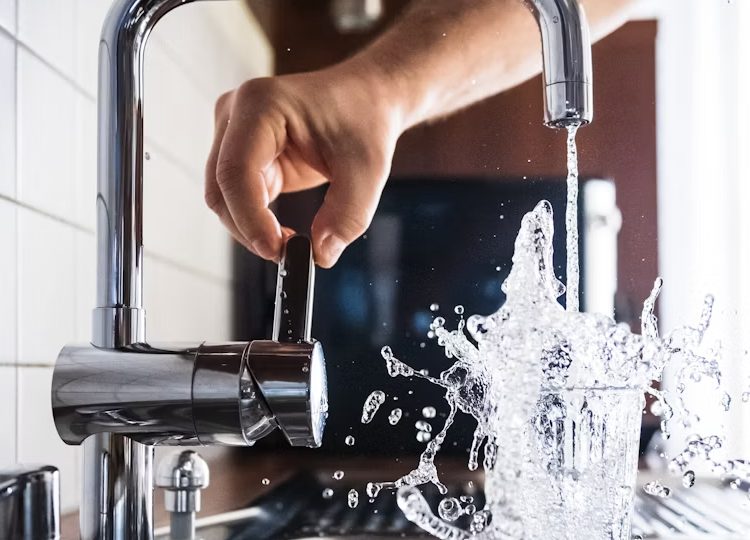
Every municipal water system delivers a specific chemical fingerprint to the homes it serves. The fingerprint is not accidental. It reflects the source water, the treatment chemistry, and the distribution system conditions that the water passes through between the treatment plant and the tap. Understanding that fingerprint, and what it does to the plumbing system components it contacts over years, is the foundation of intelligent plumbing maintenance rather than reactive repair.
Arvada’s Water Chemistry
Arvada’s water chemistry can influence how plumbing components perform over time. The effects may appear in different parts of a plumbing system, including water heaters, valves, pipes, and fixtures. Mineral content and other water characteristics can contribute to buildup, corrosion, reduced efficiency, and premature component wear.
These conditions are not caused by individual homeowners, but they can affect how plumbing systems should be maintained. Understanding the local water conditions provides a useful starting point for identifying which components may require more frequent inspection or maintenance. When a problem requires professional attention, plumbing services Arvada CO can address issues that go beyond routine homeowner maintenance.
What Consolidated Mutual Water Delivers to Arvada Homes
Consolidated Mutual Water Company, which serves Arvada and portions of Jefferson County, sources water primarily from the South Platte River system through the Denver Water interconnect and from local well fields. The water quality report published annually by Consolidated Mutual documents the delivered water chemistry.
Key parameters from recent annual reporting:
Total Hardness: 130 to 175 mg/L as calcium carbonate, varying by season and source blend. The Water Quality Association classifies water above 121 mg/L as hard. Arvada’s water falls consistently in the hard to very hard range.
pH: 7.4 to 7.8, slightly alkaline. This pH range is important because it affects how calcium carbonate deposits on pipe surfaces, near-neutral pH water deposits calcium carbonate as scale, while more acidic water tends to dissolve it.
Chloramines: Consolidated Mutual uses chloramine (chlorine + ammonia) as its primary disinfectant rather than free chlorine, because chloramines persist longer in distribution systems than free chlorine, providing residual disinfection protection through the distribution network.
Each of these parameters has specific consequences for the plumbing components it contacts over years.
What Hard Water Does to Each Major Plumbing Component
Water heater tanks: Calcium carbonate from hard water deposits at the bottom of storage tank water heaters, where the heating element or flame chamber contacts the water. The deposition rate accelerates with temperature because calcium carbonate becomes less soluble as water temperature increases.
The DOE estimates that scale accumulation at the bottom of a storage water heater reduces its efficiency by 25 to 45 percent in hard water areas. At 130 to 175 mg/L hardness, an Arvada water heater accumulates measurable scale within 18 to 24 months without flushing maintenance.
The audible evidence of this accumulation: popping, rumbling, or crackling from the tank when the burner fires. The sound is water trapped in the porous scale layer flashing to steam as the element heats from below. The mechanical stress of these steam events on the scale layer and the tank wall below it is part of what drives tank failure in hard water areas earlier than manufacturers’ lifetime ratings predict.
Tank flushing protocol: Annual drainage of 10 to 20 percent of tank volume through the drain valve flushes loose sediment before it compresses into dense scale. The valve is typically at the bottom of the tank. A garden hose connection allows discharge to a floor drain or exterior. Cold water flushed through the cold inlet while the drain valve is open produces the most thorough sediment removal.
Faucet aerators and showerheads: Calcium carbonate deposits on aerator meshes and showerhead nozzles at a rate that depends on local hardness and the volume of water passing through the fixture. At Arvada’s hardness level, an aerator that ran at full flow in year one runs at 60 to 70 percent of rated flow at year two without cleaning.
The cleaning procedure for calcium carbonate deposits is acidic dissolution. White vinegar (5 percent acetic acid) dissolves calcium carbonate on contact. Soaking a removed aerator in undiluted white vinegar for 20 to 30 minutes, followed by light scrubbing with a toothbrush, restores full flow without replacement. For showerheads, a plastic bag filled with vinegar secured over the head with a rubber band produces the same result in place without removal.
What Chloramine Chemistry Does to Rubber Plumbing Seals
Chloramine, the NH₂Cl compound used by Consolidated Mutual for distribution disinfection, has a different reactivity profile with rubber compounds than free chlorine. Chloramines are more aggressive toward certain rubber elastomers, specifically natural rubber compounds, than free chlorine at equivalent concentrations.
The mechanism is chemical attack on the sulfur crosslinks that give natural rubber its elasticity. Chloramines break these crosslinks progressively, producing rubber that becomes stiffer, less elastic, and eventually brittle over years of contact.
This explains a phenomenon that Arvada homeowners with older homes commonly experience: toilet flappers, faucet washers, and fill valve diaphragms that require more frequent replacement than neighbors in less aggressive water chemistry systems. The replacement frequency is not evidence of inferior product quality. It is evidence of accelerated elastomer degradation from chloramine exposure.
The solution is EPDM (ethylene propylene diene monomer) rubber for all replacement seals and flappers. EPDM has significantly better chloramine resistance than natural rubber and is the material specified for chloramine-compatible plumbing components by NSF International. EPDM flappers and replacement washers are now standard at most plumbing supply counters and available at hardware retailers, though the rubber type is not always labeled on packaging and requires verification at purchase.
What the Pressure Situation in Arvada’s Hill Neighborhoods Adds
Arvada’s western neighborhoods in the foothill areas above about 5,500 feet elevation are served by elevated pressure zones in Consolidated Mutual’s distribution system. Homes in these zones commonly experience static water pressure of 85 to 100 PSI, above the recommended residential range of 40 to 80 PSI.
Elevated water pressure accelerates failure of every pressure-sensitive component in the plumbing system: toilet fill valves, washing machine supply hoses, dishwasher supply connections, and refrigerator ice maker lines. The components are rated for their operating pressure range, and operating at the high end of or above that range reduces service life proportionally.
A pressure reducing valve (PRV) at the main supply entry maintains downstream pressure at a setpoint regardless of what the municipal system delivers. The recommended setpoint is 60 to 65 PSI, which is within the normal operating range of every residential fixture and appliance component.
PRVs have a service life of 10 to 15 years. A PRV that was installed in 2008 and has not been tested is 16 years old at this writing. Testing requires a pressure gauge on a hose bib, a $15 tool available at any hardware store. If the reading at a hose bib with nothing else running in the house exceeds 80 PSI, the PRV has either failed in the high-pressure direction or is absent.
PRV replacement in Arvada costs $350 to $650 installed, including the valve and the labor to replace it at the main supply connection. The failed toilet fill valve, the washing machine hose that burst at 3 a.m., and the refrigerator water line that wept onto the kitchen floor for six months before it was noticed all have the same root cause when the PRV is absent or failed.
Key Takeaways
- Consolidated Mutual Water delivers hardness of 130 to 175 mg/L as calcium carbonate, hard to very hard by WQA classification
- The DOE estimates 25 to 45 percent water heater efficiency reduction from scale accumulation in hard water areas; annual tank flushing is the preventive maintenance that manages this
- Chloramines from Consolidated Mutual’s distribution disinfection system attack natural rubber sulfur crosslinks, accelerating toilet flapper, faucet washer, and fill valve diaphragm failure; EPDM rubber replacements resist chloramine chemistry
- Arvada hill neighborhoods above 5,500 feet elevation commonly receive static pressure of 85 to 100 PSI; a PRV maintaining 60 to 65 PSI protects all downstream fixtures and appliances from accelerated pressure-related failure
- PRV service life is 10 to 15 years; a PRV installed before 2010 warrants pressure testing and likely replacement
The water chemistry is fixed. The maintenance response to it is not. Understanding what Arvada’s water does to specific components produces a maintenance schedule that addresses the right things before they fail rather than after.




1 thought on “What Arvada’s Water Chemistry Does to a Plumbing System Over Time”