
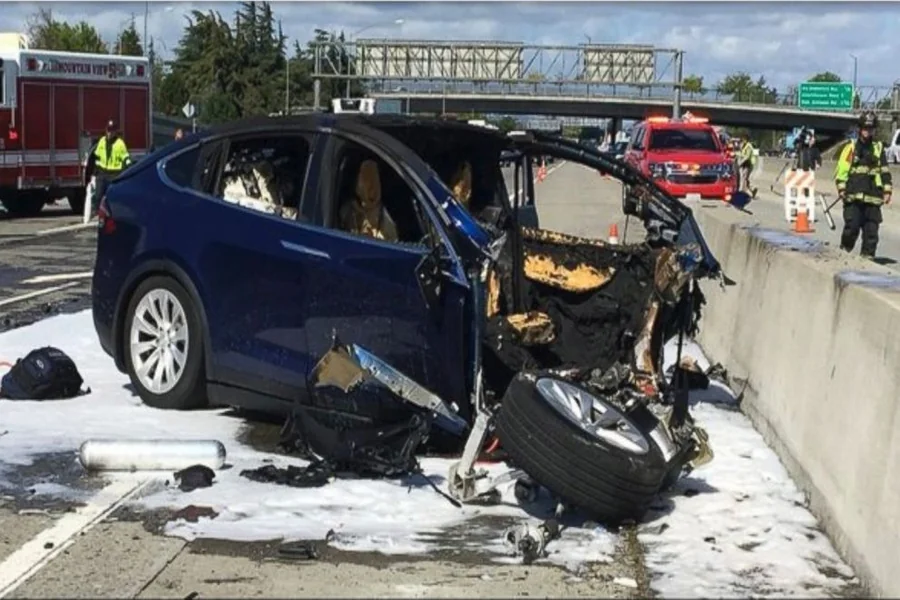
A well-known NFL head coach is recovering after a serious car accident involving his Tesla, and the incident has reignited public concern over driver-assist technology. The Kyle Shanahan Tesla crash left the coach with a severe concussion, three broken ribs, a broken nose, and a broken hand.
The coach was driving home from a routine appointment when the two-vehicle collision occurred. At the time, his Tesla Model S was operating in autopilot mode.
What Led to the Collision
According to the coach, his cell phone slipped out of reach and became lodged near the center console. He briefly turned to retrieve it, taking his attention off the road for just a few seconds.
During that short window, the vehicle drifted into oncoming traffic and struck another car head-on. The other driver involved sustained only minor injuries, while the coach required immediate medical treatment for multiple injuries.
He has since said he isn’t entirely sure what caused the vehicle to drift. He acknowledged it’s unclear whether the system malfunctioned or whether he unintentionally disengaged it while reaching for his phone.
Coach Takes Accountability, But Questions Linger
Speaking publicly for the first time since the crash, the coach addressed reporters directly. He explained that losing track of his phone in that way wasn’t typical for him.
He noted that he has relied on the autopilot feature for roughly nine years and considers himself experienced with the system. Still, he admitted that using driver-assist technology doesn’t remove personal responsibility from the equation.
He was candid about the incident, saying he felt the situation could have been much worse given where some of his injuries were located.
Recovery and Return to Work
The coach detailed an extensive list of injuries, including multiple broken bones and dozens of stitches. Despite the setback, he continued performing many of his coaching duties throughout the recovery period.
He has said that experiencing a head injury firsthand gave him new insight into what athletes go through after concussions on the field. He remained involved in game preparation even while healing.
The coach also confirmed plans to return to the sideline for an upcoming game, though the lingering effects of the concussion continue to be monitored by medical staff.
A Pattern of Concerns With Self-Driving Technology
This incident is not an isolated case. It comes amid growing scrutiny of Tesla’s Autopilot system and driver-assist technology as a whole.
Federal regulators have expanded an ongoing investigation into whether Tesla’s self-driving features adequately warn drivers of potential risks. That investigation now covers millions of vehicles across multiple model years.
Legal challenges have followed alongside the regulatory scrutiny. Courts have upheld substantial verdicts in cases involving fatal crashes where drivers were using autopilot at the time of the collision.
Other lawsuits nationwide raise similar arguments, suggesting that the branding of these systems creates a false sense of security. Critics argue this encourages the exact kind of distraction that contributed to the Kyle Shanahan Tesla accident.
What Drivers Should Understand About Self-Driving Crashes
High-profile incidents like this one raise important questions for everyday drivers who share the road with vehicles running Autopilot or similar systems. Accidents involving driver-assist technology often come with legal complications that traditional car accidents do not.
Determining Fault Isn’t Always Simple
When a crash involves a vehicle using Autopilot or Full Self-Driving features, liability can be difficult to pin down. The driver may share responsibility with the manufacturer, particularly if evidence suggests the system failed to alert the driver or malfunctioned.
Because these systems depend on cameras, sensors, and software, investigations often require detailed vehicle data. That data can reveal whether the assistance feature was active, how it responded, and whether the driver had time to react before impact.
Steps to Take After a Self-Driving Vehicle Accident
Anyone involved in a crash with a Tesla or similar vehicle should follow the same basic steps as any other accident.
- Call 911 and file a police report.
- Seek medical attention, even if injuries seem minor at first.
- Document the scene and exchange contact and insurance information.
- Avoid discussing fault at the scene, since autopilot involvement can complicate liability later.
- Consult with an experienced car accident attorney as soon as possible.
An attorney can help determine whether vehicle technology contributed to the crash and can work quickly to preserve important data before it is lost or overwritten.
How an Experienced Attorney Can Help
Cases involving Autopilot or self-driving features are rarely straightforward. These systems are assistive, not fully autonomous, and proving what role the technology played in a crash requires skilled investigation and legal knowledge.
An experienced personal injury law firm can obtain and analyze vehicle data, identify all liable parties, and build a strong case on behalf of an injured driver or passenger. This includes determining whether the manufacturer, the driver, or both share responsibility for the accident.
Insurance companies often try to minimize payouts in these cases, especially when driver-assist technology is involved. Having knowledgeable legal representation ensures that injured parties are not taken advantage of during settlement negotiations.
Anyone injured in a crash involving Autopilot or similar technology deserves a full investigation into what happened and strong advocacy throughout the claims process. An experienced attorney can guide accident victims through every step, from gathering evidence to pursuing fair compensation for medical expenses, lost wages, and other damages.