
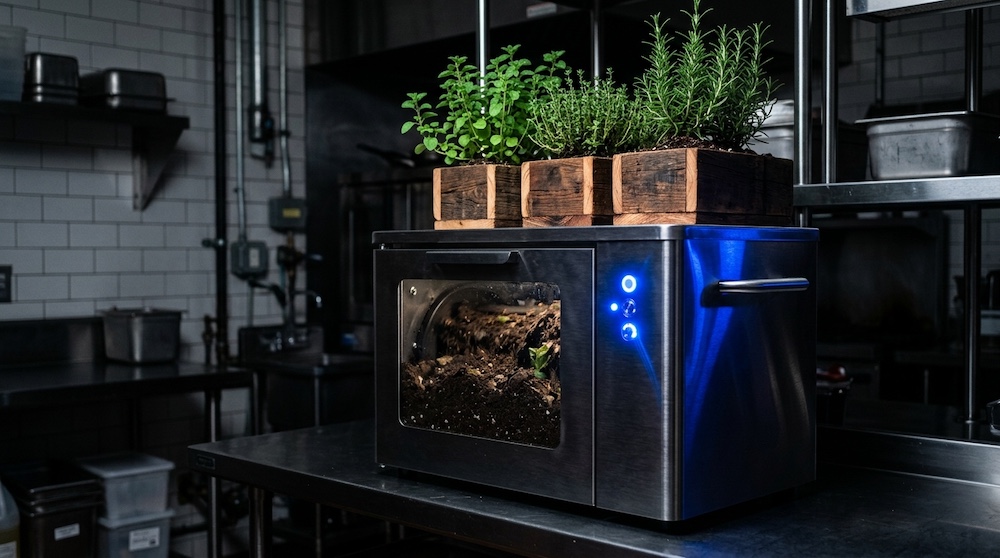
Eighteen months ago, a small restaurant on the North Shore of Lake Tahoe was hauling eight large bins of trash to the curb every week. Today, that number is fewer than three — and the kitchen team barely thinks about it anymore.
No major renovation. No expensive technology. Just a systematic rethinking of how waste moves through a working kitchen.
Here’s exactly how they did it.
The Starting Point: An Honest Waste Audit
Before making any changes, the owner spent two weeks logging every category of waste leaving the kitchen. The breakdown was uncomfortable but clarifying:
- 42% food scraps and prep waste
- 31% single-use packaging from supplier deliveries
- 18% food spoilage from over-ordering
- 9% non-recyclable serviceware and miscellaneous
The audit revealed something most restaurant owners suspect but rarely quantify — the majority of their waste is preventable, not inevitable.
The Five Changes That Drove the Results
1. Curbside Organics Enrollment
The single biggest move. Enrolling in El Dorado County’s organics collection program diverted the entire food scrap stream — prep waste, plate scrapings, coffee grounds, eggshells — out of the general trash bin entirely.
Combined with a designated organics bin in the kitchen, food waste dropped out of the landfill equation almost immediately.
2. Supplier Packaging Negotiation
The kitchen manager contacted every major supplier and requested:
- Delivery in reusable totes instead of cardboard
- Bulk formats instead of individually wrapped portions
- Take-back agreements for crates, pallets, and packaging materials
Three out of five suppliers agreed within the first month. The cardboard waste stream shrank by over half.
3. Menu-Driven Inventory Management
Over-ordering was costing the restaurant in two ways — purchase cost and disposal cost. The solution was tighter menu rotation built around actual inventory on hand.
A simple weekly prep sheet — cross-referencing what was ordered against what was used the prior week — reduced spoilage dramatically. Surplus produce that would have previously been discarded was worked into daily specials instead.
4. Replacing Single-Use Serviceware
The restaurant eliminated:
- Plastic straws → replaced with paper alternatives
- Single-use condiment packets → switched to table dispensers
- Plastic takeout containers → moved to compostable packaging
Takeout volume was high enough that this change alone removed a significant weekly volume from the trash stream.
5. Staff Training as a System — Not a One-Off
Every new team member receives a fifteen-minute waste orientation covering:
- Which bin receives which material
- Why contamination in the organics bin matters
- How to flag over-ordering patterns to management
Consistency across shifts was the piece that made everything else stick. Waste systems fail in kitchens when they depend on individual initiative rather than shared habit.
The Numbers After 18 Months
| Waste Stream | Before | After |
|---|---|---|
| General landfill trash | 8 bins/week | 2.5 bins/week |
| Food scraps to landfill | High | Near zero |
| Supplier packaging waste | 31% of total | Under 12% |
| Food spoilage cost | Significant weekly loss | Reduced by ~60% |
What the Owner Says Made the Difference
Not passion. Not environmentalism. Operational discipline.
The waste reduction program succeeded because it was treated like any other kitchen system — with assigned responsibility, measurable outcomes, and regular review. The environmental benefit was real, but the financial case closed the deal.
Less food wasted meant lower purchasing costs. Less trash meant lower disposal fees. Both went straight to the bottom line.
The Takeaway for Other Restaurants
Seventy percent is achievable without a complete operational overhaul. Start with an honest audit, tackle the largest waste stream first, and build staff habits around the new system.
The trash problem in most kitchens isn’t a values problem. It’s a systems problem — and systems can be fixed.