
The early years of a child’s life lay the crucial neural and emotional groundwork for all future learning, behavior, and physical health. During this remarkable stage, young brains form millions of new neural connections every second, shaped largely by daily environments, relationships, and play experiences. By providing intentional nurturing, rich language exposure, structured routines, and supportive learning environments, parents and caregivers can unlock their child’s full developmental potential. Supporting early childhood development builds a strong foundation that fosters lifelong confidence, curiosity, resilience, and academic success.
Prioritize Responsive Caregiving and Emotional Connection
The foundation of healthy early childhood development rests upon safe, secure, and nurturing relationships with primary caregivers. Responsive caregiving—often described as serve-and-return interaction—occurs when an adult responds warmly and promptly to a child’s vocalizations, facial expressions, and emotional cues.
When a toddler points at an object, makes a sound, or cries for comfort, a prompt and affectionate response signals that their feelings are valid and their environment is secure. This emotional security lowers stress hormones in developing brains, allowing children to direct their physical energy toward exploration, social play, and cognitive learning.
Expressing consistent warmth through gentle eye contact, physical affection, and active listening builds deep emotional security. Children who feel securely attached to their caregivers develop greater self-regulation, empathy, and social confidence as they interact with peers and adults in group settings.
Encourage Unstructured Play and Creative Exploration
Play is the primary mechanism through which young children make sense of the world around them. Unstructured, child-led play fosters independent thinking, creative problem-solving, spatial awareness, and motor skill development without the pressure of strict rules or expected outcomes.
Provide children with open-ended materials such as wooden blocks, cardboard boxes, playdough, finger paints, and simple costume pieces. Unlike single-purpose electronic toys, open-ended items encourage toddlers to invent scenarios, build imaginative structures, and experiment with cause and effect freely.
Allowing children the freedom to choose their play activities builds confidence and decision-making capabilities. Unstructured play sessions spark innate curiosity, allowing young minds to test ideas, navigate minor challenges, and express their creativity naturally.
Supporting Dramatic and Pretend Play
Encouraging children to dress up and enact everyday scenarios helps them process real-world experiences and develop complex narrative thinking skills.
Pretend play allows toddlers to step into different roles, practicing social perspective-taking and emotional empathy naturally. Creative pretend play enriches imaginative cognitive development.
Providing Open-Ended Building Materials
Offering simple building blocks, stacking cups, and natural wooden pieces encourages spatial reasoning, balance understanding, and fine motor precision.
Building structures allows young children to test physical concepts like gravity and symmetry through trial and error. Open-ended building toys foster persistent problem-solving habits.
Foster Early Language and Literacy Skills Daily
Language acquisition is one of the most significant cognitive milestones achieved during the early years. Exposing young children to a rich, varied vocabulary daily accelerates brain development, enhances communication skills, and prepares them for future reading comprehension.
Engage in continuous conversation with your child throughout daily routines like grocery shopping, bath time, and meal preparation. Describe what you are doing, point out interesting visual details in your environment, ask open-ended questions, and listen patiently as your toddler formulates their verbal responses.
Read books together every single day, pointing to colorful illustrations, making expressive character voices, and discussing story plots. Surrounding children with books, singing nursery rhymes, and discussing stories builds essential phonemic awareness and a lifelong passion for reading and learning.
Engaging in Descriptive Daily Conversations
Narrating everyday tasks introduces fresh vocabulary in meaningful contexts, helping toddlers connect words with real-world objects and actions effortlessly.
Asking open-ended questions encourages children to construct longer sentences and express complex thoughts clearly. Daily conversational dialogue expands early communication capabilities.
Reading Interactive Picture Books Together
Asking children to predict what happens next on the following page develops critical story comprehension and logical reasoning skills.
Pointing out written text while reading connects spoken words with visual symbols, laying early foundations for independent reading. Daily storybook reading builds language proficiency.
Establish Predictable Routines and Healthy Habits
Young children thrive when their daily environments are structured, predictable, and calm. Consistent daily routines provide toddlers with a comforting sense of emotional security, helping them understand expectations and manage transitions between activities smoothly.
Design structured daily schedules for meals, afternoon naps, outdoor play, and evening bedtimes. Predictable routines reduce toddler anxiety and behavioral outbursts, as children learn to anticipate upcoming events throughout the day without feeling rushed or overwhelmed.
Prioritize healthy physical habits, including nutrient-dense meals, generous hydration, and consistent bedtime schedules. Ensuring young children receive nine to twelve hours of restful sleep nightly supports healthy physical growth, memory consolidation, and daytime emotional regulation.
Creating Calm Evening Bedtime Rituals
Establishing a quiet bedtime routine—such as a warm bath, dimming lights, and reading a story—signals to developing bodies that it is time to rest.
Consistent sleep schedules prevent physical fatigue, mood swings, and daytime attention difficulties in growing toddlers. Calm evening rituals promote deep, restorative sleep.
Structuring Consistent Daily Meal Times
Serving balanced meals and healthy snacks at predictable intervals keeps blood sugar levels stable and supports continuous physical growth.
Gathering around family dining tables encourages social conversation, healthy eating habits, and positive table manners. Regular meal schedules sustain steady physical energy.
Enroll in High-Quality Early Education Programs
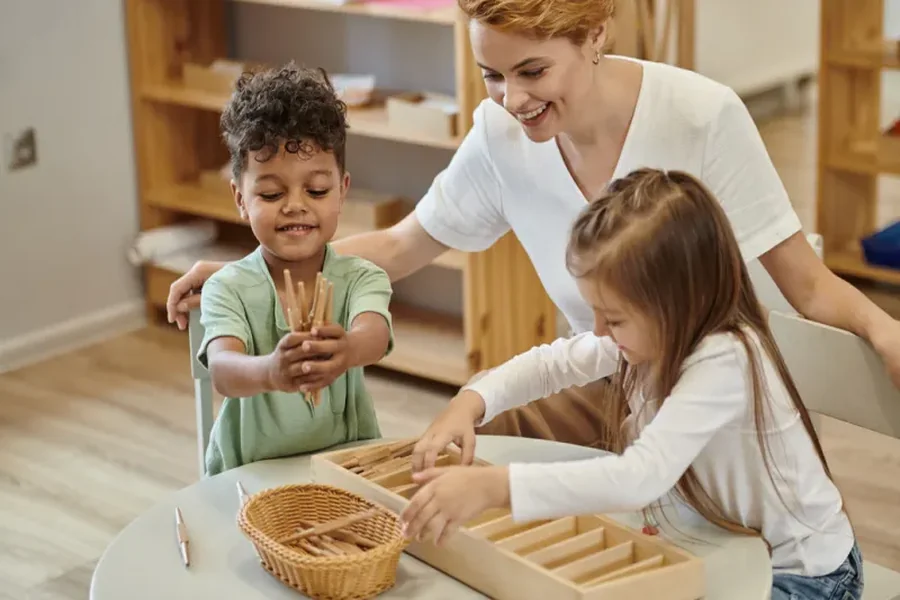
As children near preschool age, enrolling them in structured early learning programs provides invaluable opportunities to expand their social, emotional, and cognitive horizons beyond the home environment. Early education classrooms offer structured curricula designed specifically to support early developmental milestones.
Attending a reputable program for pre-K in Albuquerque or your local community introduces young learners to certified educators, diverse learning centers, and cooperative peer activities. Quality early childhood classrooms balance academic readiness—such as letter recognition and counting—with rich social-emotional learning that prepares children for kindergarten success.
Early education settings teach children how to follow multi-step group instructions, share materials, resolve peer conflicts peacefully, and practice self-advocacy. Early academic and social exposure builds classroom confidence and fosters smooth transitions into elementary school environments.
Developing Social-Emotional Competence in Groups
Participating in group classroom activities teaches young children how to take turns, respect personal boundaries, and listen attentively to others.
Interacting with diverse peers under teacher guidance builds empathy, emotional self-control, and cooperative teamwork. Group settings foster essential social competence.
Mastering Foundational Academic Concepts
Quality early childhood classrooms introduce early math, science exploration, and literacy concepts through hands-on, play-based learning centers.
Interactive classroom activities make early learning engaging, building curiosity and academic confidence before formal schooling begins. Early education programs ignite a passion for learning.
Promote Physical Movement and Gross Motor Skills
Physical activity is vital for developing strong muscles, dense bone structure, cardiovascular health, and gross motor coordination in young children. Active play also supports brain development by improving spatial orientation, balance, and cognitive focus.
Provide daily opportunities for outdoor play where children can run, jump, climb, swing, and throw balls freely. Outdoor environments encourage children to push their physical boundaries safely, building agility, physical balance, and risk-assessment capabilities.
Incorporate indoor movement through dance parties, simple obstacle courses, and toddler yoga sessions on rainy days. Encouraging regular physical activity establishes healthy lifelong fitness habits while releasing excess physical energy positively.
Encouraging Outdoor Park and Playground Play
Navigating playground ladders, slides, and balance beams develops core body strength, coordination, and spatial awareness naturally.
Outdoor physical play exposes children to fresh air, natural sunlight, and sensory textures that stimulate brain development. Playground exploration builds physical confidence.
Creating Safe Indoor Movement Courses
Setting up soft pillow obstacles and painter’s tape balance lines indoors encourages physical coordination and motor planning during inclement weather.
Indoor physical games provide healthy outlets for active toddler energy, keeping children physically engaged year-round. Creative movement supports gross motor control.
Nurture Fine Motor Skills and Hand-Eye Coordination
While gross motor skills involve large muscle movements, fine motor skills focus on developing dexterity in small hand and finger muscles. Fine motor precision is essential for future self-care tasks, buttoning clothing, using utensils, and mastering handwriting tools.
Provide toddlers with engaging hands-on activities like squeezing modeling clay, peeling stickers, threading large beads onto strings, and playing with safety scissors. These tactile exercises strengthen finger muscles and build hand-eye coordination naturally.
Offer diverse art supplies, including thick crayons, washable markers, finger paints, and sidewalk chalk. Encouraging scribbling, drawing, and cutting activities prepares small hands for comfortable pencil control when children enter formal school settings.
Strengthening Finger Dexterity with Modeling Clay
Rolling, pinching, and squishing clay builds intrinsic hand strength required for holding writing utensils correctly later in childhood.
Tactile play materials engage sensory pathways while strengthening fine motor control. Clay manipulation enhances hand muscle development.
Practicing Scissors and Crafting Skills
Using blunt-tipped safety scissors to cut paper strips improves bilateral hand coordination and visual-motor integration significantly.
Crafting activities require children to stabilize materials with one hand while manipulating tools with the other. Guided art projects refine fine motor precision.
Encourage Self-Regulation and Emotional Literacy
Learning to identify, understand, and manage intense emotions is one of the most challenging developmental tasks young children face. Emotional regulation does not mean suppressing feelings; rather, it involves learning to express big emotions appropriately and calm down after experiencing frustration.
Help children name their emotions by labeling feelings during challenging moments, saying things like, “I see that you feel angry because your tower fell over.” Validating their emotional experience helps children build emotional literacy and self-awareness.
Teach simple, age-appropriate calming techniques, such as taking deep belly breaths, counting to five, or sitting in a cozy quiet corner with a favorite stuffed animal. Guiding children through emotional outbursts with patience teaches them healthy self-soothing strategies that build lifelong emotional resilience.
Labeling Emotions to Build Verbal Literacy
Naming feelings like sadness, excitement, fear, and frustration gives young children the vocabulary needed to express internal feelings verbally.
Replacing physical tantrums with descriptive emotional words reduces frustration for both children and caregivers. Emotion labeling strengthens self-awareness.
Teaching Simple Deep Breathing Techniques
Guiding children to take slow, deep “balloon breaths” during moments of frustration activates their body’s natural relaxation response.
Practicing calming techniques during peaceful moments ensures children can access these coping skills when feeling overwhelmed. Deep breathing builds emotional self-control.
Limit Screen Time and Encourage Sensory Real-World Play
In today’s digital world, young children are increasingly exposed to televisions, tablets, and smartphones. Excessive screen time during the early years can displace critical real-world sensory play, physical movement, face-to-face social interactions, and healthy sleep patterns.
Establish clear household screen boundaries by keeping bedrooms screen-free and turning off background televisions during meals and play sessions. Pediatric experts recommend avoiding media screens for children under eighteen months and limiting screen time to one hour daily of high-quality educational programming for older toddlers.
Replace digital entertainment with rich sensory experiences, such as playing in sandboxes, splashing in water tables, exploring gardens, and feeling different fabric textures. Real-world sensory play engages all five senses, building neural connections that digital screens simply cannot replicate.
Engaging in Water and Sand Sensory Play
Pouring, measuring, and sifting water and sand introduces early concepts of volume, weight, and physics through hands-on sensory exploration.
Tactile sensory play calms nervous systems while stimulating cognitive curiosity and fine motor control. Real-world materials enrich brain development.
Exploring Nature and Outdoor Environments
Walking through local parks, collecting autumn leaves, and watching insects fosters natural curiosity and environmental appreciation.
Nature exploration provides rich, multi-sensory experiences that spark scientific questions and deep observation skills. Outdoor play promotes real-world learning.
Model Positive Social Behaviors and Kindness
Young children learn far more from watching their parents’ and caregivers’ daily actions than from verbal lectures alone. Children observe how adults manage stress, interact with partners, speak to neighbors, and handle daily conflicts continuously.
Model the social behaviors, manners, and empathy you wish to see in your child. Use polite words like “please,” “thank you,” and “excuse me” naturally, and demonstrate kindness, active listening, and patient problem-solving during daily interactions.
When conflict occurs between siblings or playmates, guide children through gentle conflict resolution rather than issuing immediate punishments. Encouraging children to apologize sincerely, share toys, and comfort sad peers builds strong prosocial behaviors and deep social empathy.
Modeling Polite Communication and Active Listening
Using courteous language and maintaining patient eye contact during family interactions teaches children respectful communication habits.
Children mirror adult conversational tones and manners naturally in their own peer relationships. Positive modeling shapes social etiquette.
Guiding Cooperative Conflict Resolution
Helping playmates express their feelings and negotiate toy sharing teaches fair problem-solving and mutual respect.
Guiding children through peer disagreements builds emotional intelligence and cooperative social skills. Active conflict resolution nurtures social maturity.
Conclusion
Supporting your child’s development during the early years is a rewarding journey built upon love, intentional engagement, and consistent daily habits. By prioritizing emotional connection, encouraging open-ended play, fostering language skills, establishing routines, considering quality early education, promoting movement, guiding emotional self-regulation, limiting screens, and modeling kindness, you create an ideal environment for growth. Thoughtful early childhood support builds a strong foundation that helps your child enter school with confidence, curiosity, and the emotional resilience needed to achieve lifelong success.